Real estate lead follow-up can combine CRM ownership, response-time tracking, reminders, email or SMS sequences, task creation and AI-assisted message handling while keeping agents responsible for qualification and relationship decisions.
How to Identify Business Processes Worth Automating
The best automation candidates are frequent, repetitive, rules-based processes that consume meaningful staff time and have a clear output that can be verified.
How Much Does Business Automation Cost?
Business automation cost depends on workflow complexity, number of systems, API availability, exception handling, data quality and the level of testing and support required. A small single-workflow build may be modest, while a connected operating system requires a larger scoped engagement.
How to Automate Business Email Management
Business email automation works best when AI or rules classify incoming messages, identify required action, create tasks or follow-ups, prepare drafts and escalate uncertain or sensitive messages for human review.
How to Automate Client Onboarding Without Losing the Human Touch
Automate the repeatable parts of onboarding—forms, document requests, task creation, reminders and status updates—while keeping kickoff conversations, exceptions and relationship decisions under human control.

How to Automate Lead Follow-Up for a Small Business
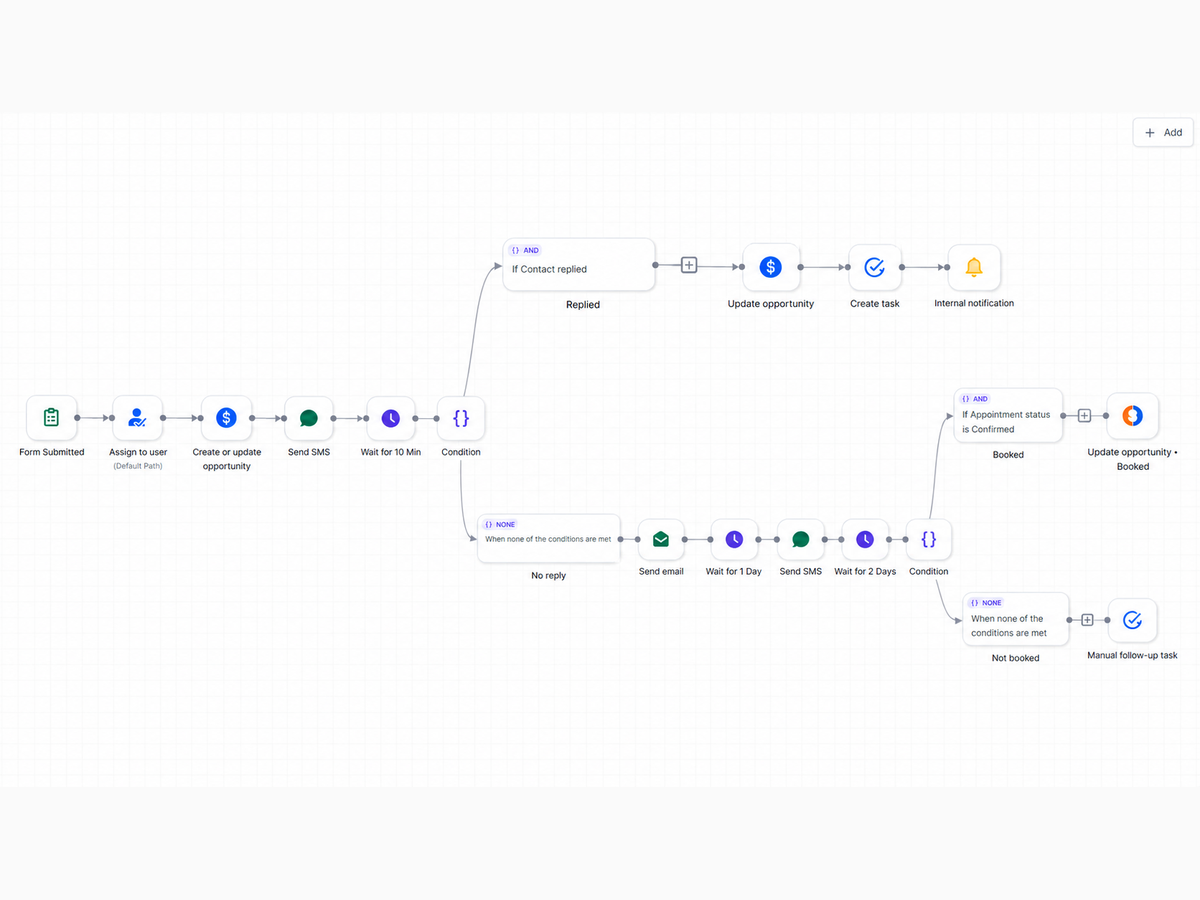
A small business can automate lead follow-up by capturing every enquiry in one system, assigning an owner, creating a next action, scheduling reminders and triggering appropriate email or task sequences while keeping human review for meaningful sales conversations.
n8n vs Make for Business Automation
Both can automate business workflows. Make is often faster for visual SaaS integrations, while n8n offers more control and flexibility for technical, self-hosted or API-heavy workflows.
What Business Processes Should You Automate First?
Automate frequent, repetitive processes with clear rules and visible outcomes before attempting complex end-to-end automation.

AI Agents vs Traditional Automation: What Is the Difference?
Traditional automation follows defined rules. AI agents can interpret less-structured inputs and choose among possible actions, but they still need boundaries, tools, monitoring and human escalation.