Bottom line: Real estate teams can automate speed-to-lead, reminders, pipeline updates, and routine nurturing while keeping agents responsible for conversations that require judgment. The goal is not robotic outreach; it is making sure no qualified enquiry is forgotten. Why real estate leads go cold Leads often arrive from portals, listing pages, referrals, social campaigns, email, and phone calls. When these channels are not connected, agents respond late, duplicate work, or lose visibility after the first contact attempt. 1. Centralize lead sources Push every enquiry into one CRM with source, property, location, budget, timeline, and assigned owner. 2. Trigger an immediate acknowledgement Send a fast confirmation that sets expectations and tells the prospect what happens next. 3. Route by intent and urgency A seller lead, buyer enquiry, investor request, rental enquiry, and vendor lead should not follow the same workflow. 4. Automate reminders and stale-lead alerts Create tasks when an agent has not responded, when a lead has been inactive for a defined period, or when an important follow-up date is approaching. 5. Keep human control over the conversation Negotiations, pricing guidance, offers, complaints, legal questions, and high-value decisions should remain human-led. 6. Track conversion bottlenecks Measure response time, contact rate, appointment rate, stage aging, lost reasons, and follow-up completion. A real-world small-team workflow For a 2–5 person brokerage or property team, a lightweight operating flow can be enough: new lead → assigned agent → first response → follow-up date → property interest → appointment → active opportunity → closed/lost. The important part is that every active lead has one owner and one next action. This is also the use case behind our Exec Flow CRM concept, starting at $29/month for up to 5 team members. It is designed for small real estate teams that need lead tracking, tasks, property/order records and management visibility without a large enterprise CRM. Automation examples Website or portal lead creates a CRM record automatically. Agent receives assignment and response task. No-response leads trigger a reminder instead of disappearing. Stale opportunities surface on a management dashboard. Make, n8n or Zapier can connect forms, email, calendar, spreadsheets and external lead sources. Do not automate the relationship Automation should support speed and consistency. Pricing advice, negotiations, offers, disclosures, disputes and sensitive property decisions should remain human-led. See our Real Estate, Property & Construction solutions, explore CRM automation, review the Real Estate / BPO Operations System case study, or compare starting plans. Small real-estate teams can also review Exec Flow CRM starting at $29/month for up to 5 users.
How to Automate Lead Follow-Up for Shopify and Ecommerce Stores
Bottom line: Ecommerce stores lose revenue when inquiries, abandoned carts, wholesale requests, and high-intent leads are handled inconsistently. A practical automation system connects your forms, store, CRM, email, and task workflows so every qualified lead receives the right follow-up without removing human control. Where ecommerce follow-up usually breaks Most growing stores use several disconnected tools: Shopify, email, spreadsheets, Meta leads, WhatsApp, helpdesk software, and a CRM. The problem is rarely a lack of leads. It is usually a lack of consistent routing, ownership, timing, and visibility. 1. Capture every lead in one pipeline Route contact forms, quote requests, wholesale enquiries, chat leads, and campaign responses into one CRM or operating dashboard. Standardize source, product interest, order value, country, urgency, and lead owner. 2. Segment by buying intent Do not send the same automation to everyone. Separate retail enquiries, wholesale buyers, abandoned-cart contacts, repeat customers, and high-value opportunities. High-intent leads should move to a human faster. 3. Automate the first response Send an immediate acknowledgement with a clear next step. For simple requests, provide useful information automatically. For higher-value enquiries, create a task and notify the responsible person. 4. Build a follow-up sequence Use timed follow-ups when there is no reply, but stop automation as soon as the prospect responds. A simple sequence can include an immediate confirmation, a value-based reminder, a case study, and a final check-in. 5. Measure the workflow Track response time, reply rate, qualified lead rate, booked calls, recovered opportunities, and sales influenced by follow-up. A realistic ecommerce problem scenario A common store receives leads from Shopify forms, abandoned checkout activity, Instagram or Meta campaigns, WhatsApp and wholesale enquiries. One team member checks email, another watches the store, and someone else updates a spreadsheet. The result is duplicated follow-up, slow responses and no shared view of which enquiries are worth attention. A practical fix is to connect the lead source to a CRM or structured sheet, assign an owner, create the next action, trigger an approved acknowledgement and stop automated follow-up as soon as a real reply is detected. Where Make, n8n or Zapier can help Make: useful for visual multi-step flows such as Shopify → CRM → Gmail → task → Slack. n8n: useful when the workflow needs APIs, custom conditions, AI classification, databases or more control. Zapier: useful for simpler app-to-app triggers where ease of maintenance is more important than custom logic. What not to automate Pricing exceptions, complaints, complex wholesale deals, refunds, fraud concerns and sensitive customer situations should remain visible to people. Automation should accelerate routine coordination, not hide commercial judgment. Explore our Ecommerce & Retail solutions, review our business automation services, see the Ecommerce Operations System case study, or compare starter automation plans from $49. If your store needs custom CRM, portal or SaaS logic, see our custom CRM & SaaS options.
How to Automate Proposal Follow-Up Without Sounding Robotic
Proposal follow-up can be automated around reminders, status tracking and timing while keeping the actual message personalized and reviewed by a salesperson.
How to Improve CRM Adoption in a Small Sales Team
CRM adoption improves when the system matches the real sales process, requires minimal duplicate entry, clearly shows next actions and gives salespeople useful information rather than extra administration.
How to Automate Sales Reporting
Automated sales reporting starts by standardizing CRM stages and source data, then moving recurring calculations and summaries into a dashboard or scheduled reporting workflow.
AI Automation for Real Estate Lead Follow-Up
Real estate lead follow-up can combine CRM ownership, response-time tracking, reminders, email or SMS sequences, task creation and AI-assisted message handling while keeping agents responsible for qualification and relationship decisions.

How to Connect CRM and Email for Better Follow-Up
Connecting CRM and email allows teams to capture conversations, create tasks, update lead stages and trigger follow-up without manually copying information between inboxes and the sales pipeline.
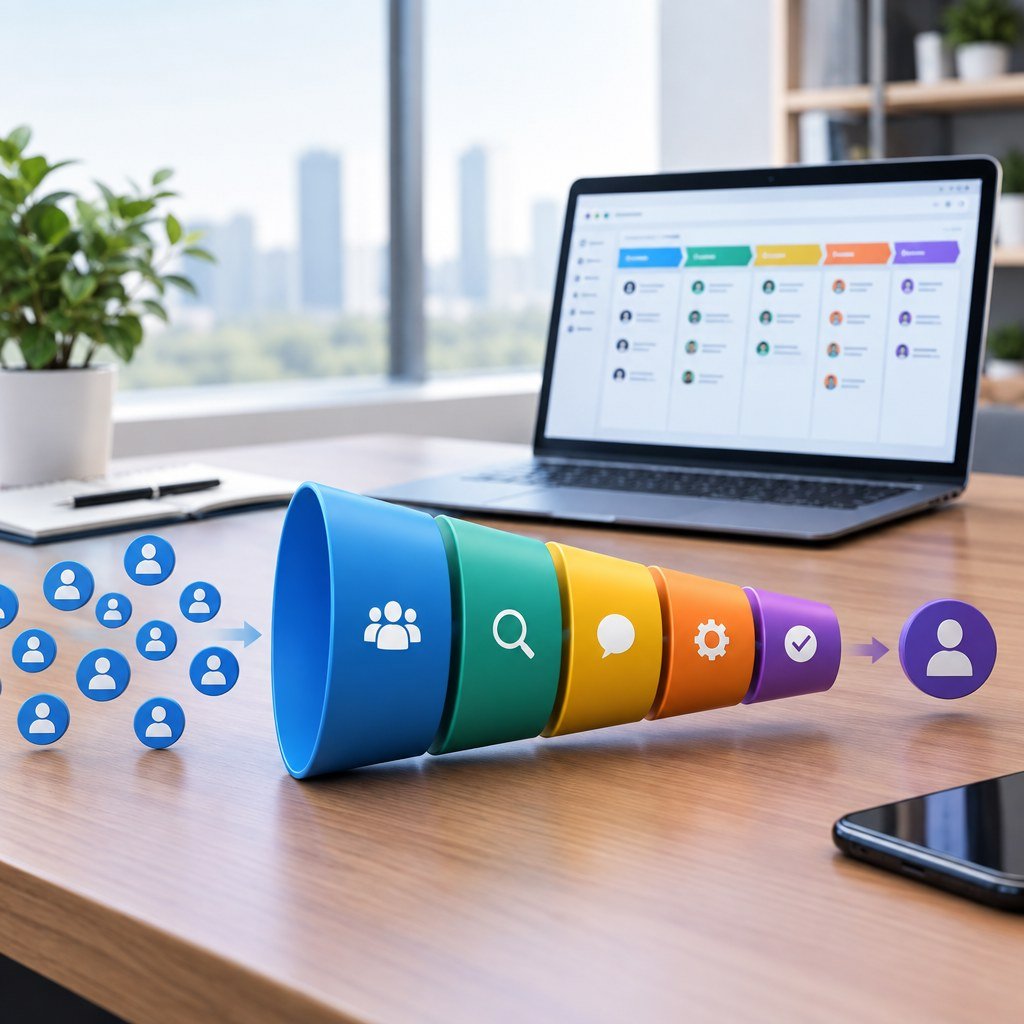
CRM vs Spreadsheet: Which Is Better for a Small Business?
A spreadsheet is often enough for a very small, simple process. A CRM becomes more useful when multiple people manage leads, follow-up must be reliable, communication history matters, or management needs pipeline visibility.

How to Automate Lead Follow-Up for a Small Business
A small business can automate lead follow-up by capturing every enquiry in one system, assigning an owner, creating a next action, scheduling reminders and triggering appropriate email or task sequences while keeping human review for meaningful sales conversations.
How AI Can Work With Your Existing CRM
AI does not need to replace your CRM. It can help classify enquiries, summarize conversations, prepare follow-up, enrich records and surface next actions while the CRM remains the system of record.